

Critter of the Month
Hey everyone! It’s Charlotte Reisiger from the Lake Stewardship Committee. Every month, we will write about a new critter that we have around our lake. Big or small, all nature deserves our appreciation!
Dragonfly
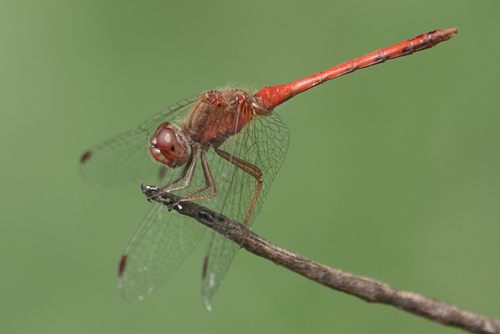
Autumn Meadowhawk: https://www.inaturalist.org/taxa/68139-Sympetrum-vicinum
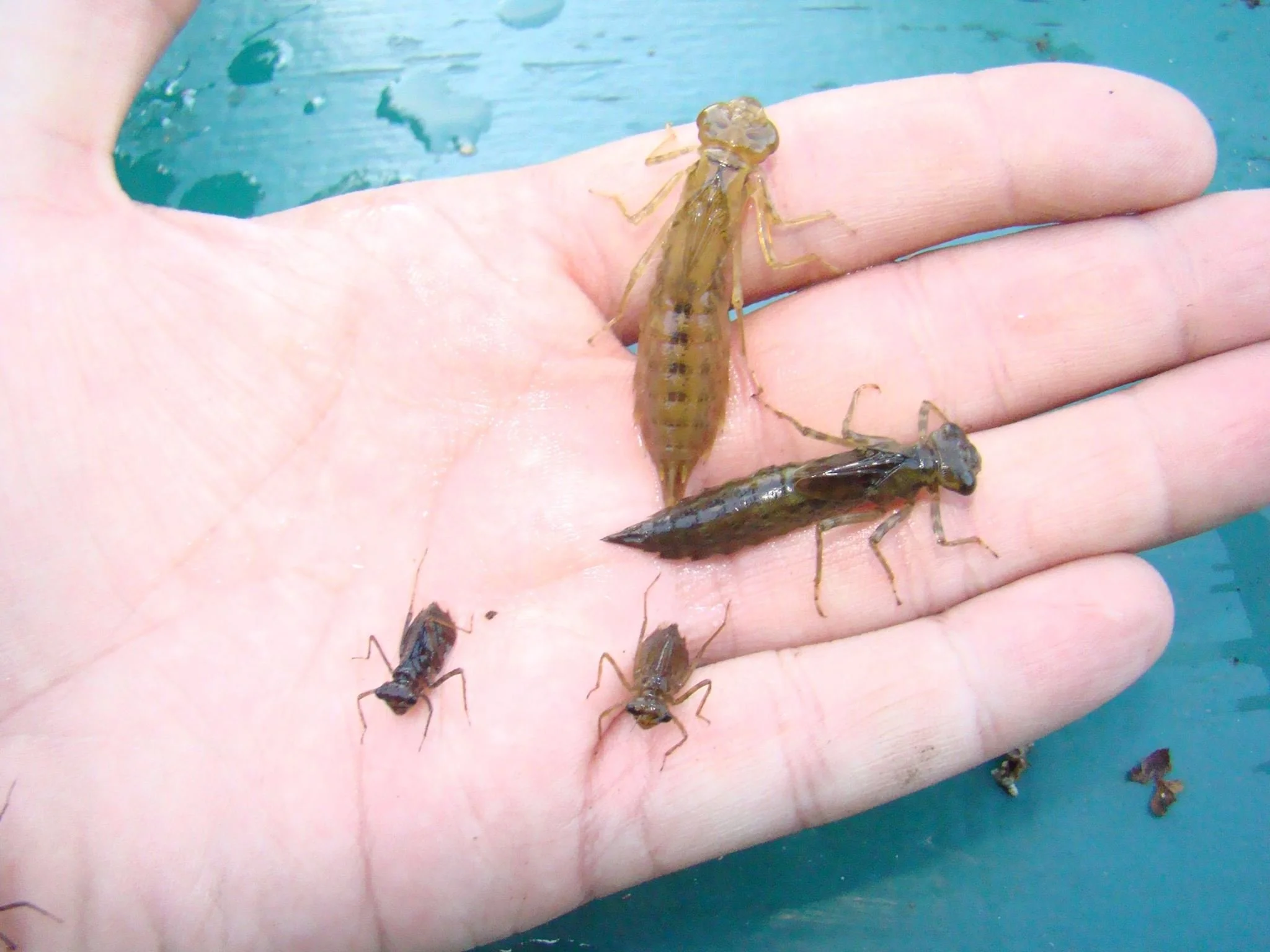
Dragonfly Nymphs: https://breedingbutterflies.com/odonata-dragonflies/
They are one of the most successful predators in the animal kingdom with a 97% accuracy rate while hunting. Can you guess what our critter is this month?
With over 30,000 lenses in their eyes, Dragonflies cruise our summer and early fall skies effortlessly. With 336 species of damselflies and dragonflies in Eastern North America, it’s no wonder they are what we think of when we picture summers on the lake. Not only are they nice to look at up close and watch them maneuver in the sky, they also serve a great purpose to us!
Dragonflies eat bugs we consider pests and without them, our summers would be a lot itchier. In their larval stage, dragonfly nymphs can eat around 40 mosquito larvae a day, and their exceptional predatory skills continue into adulthood, where they can eat over 100 mosquitos a day! They also eat midges, horse flies and deer flies, keeping us free from any nasty bites we may get splashing around in the water.
Beyond their impressive appetite for the pesty insects we don’t like, these aerial acrobats hold a few more cool facts. Dragonflies are built for extreme speed, capable of cruising through the air at speeds up to 56 km/hour (35 miles/hour). This makes them one of the fastest-flying insects in the world.
To any starry-eyed romantics watching from the shoreline, when dragonflies mate, they bend their bodies into a configuration, this intricate pose forms a surprisingly perfect heart shape. This configuration is known as the "mating wheel"! So, if their hunting skills and flight speeds aren't enough to charm you, their romantic side just might.
Dragonflies can also lay up to 100 eggs in a batch (close to 1000 in their lifetime). They lay their eggs near the water’s edge, and the fully aquatic nymphs can take anywhere from a few months to a few years to grow. You may find them under submerged rocks or your dock.
All species of dragonflies are great indicators of shoreline and good water health. The fact that Boshkung is home to so many of them every summer is great news!
Whether you're watching them dart across the water at lightning speed or spotting a pair dancing in the summer air, these beneficial insects truly make lake life a little more magical. Though summer may be over, on a sunny day, you still may see a few flying around, so keep your eyes peeled!
Sources:
https://british-dragonflies.org.uk/odonata/life-cycle-and-biology/
https://www.nhm.ac.uk/discover/dragonflies-the-ultimate-hunters.html
https://onnaturemagazine.com/odonata-guide.html
https://biology.ucdavis.edu/news/how-dragonflies-catch-prey-midair
https://thamesriver.on.ca/the-incredible-dragonfly/
https://www.nps.gov/articles/species-spotlight-dragonflies.htm
https://cmcd.org/partners-not-heroes-the-real-role-of-dragonflies-in-mosquito-control/
July 2026
Dock Spider
(also known as Fishing Spider, Wharf Spider or Raft Spider)

Now you see me, now you don’t!
This July’s critter of the month was highly requested at the Annual Meeting this year. Stripey and lightning fast, our critter this month is a Dock Spider!
Before you squish these fascinating creatures try to think back on some of these fun facts!
The Dock Spider, also known as a Fishing Spider, Wharf Spider or Raft Spider is an incredible ambush hunter. They are striped with brown, grey and sometimes black. Using its millions of hairs on its long 8 legs, Dock spiders distribute their weight and use the water’s surface tension to skate across the top of the water to find their next meal. They eat a variety of prey including insects of all kinds (aquatic and land) and sometimes even small fish and tadpoles, hence their alter ego – the Fishing Spider! These spiders can get quite large. Females can get up to 15 – 26 millimeters in body width, and a leg sprawl of over 10 cm! Males are much smaller, but still can cause quite a fright! They like to hang out in the cracks of rocks, docks and decks that are near the water. Dock Spiders are the LARGEST native spider species we have here in Canada!
A common mistake when identifying Dock spiders is calling them a Wolf Spider. These are not the same type of Spider! Wolf Spiders are smaller than Dock Spiders, and have thicker legs and two massive main eyes they use for their nocturnal tactical hunting skills. They can still get quite large, usually around 5 centimeters. They are incredibly fast and are striped with dark brown or black. They hunt for insects like ants, crickets, beetles and grasshoppers. They get their name from their attacks on prey, which are similar to a wolf! You will likely find them hanging around rock walls, underneath decks, in leaf litter and in wood piles.
Neither the Dock spider or Wolf spider spin webs to catch prey like other spiders. Instead, they rely on their speed and excellent eyesight to pounce on their prey. These spiders do NOT pose an immediate threat to humans. If picked up, poked at or squished with a foot, they may deliver a bite, but we think we would too! This bite is not considered dangerously venomous; however, it can be slightly painful and cause some swelling. Like all bug bites, it should be monitored in case of an allergic reaction (which is rare).
These spiders eat pests we don’t like around our cottages like ants and borer beetles: however, if you do not want them around, the best way is to remove possible habitat for them to live in, like piles of old dock boards, however, it may be difficult to remove the docks and rocks you sit on. They will not bother you if you do not bother them. It is dangerous to spray for these spiders near water as the spray can affect other insects, fish and people! Keep your eyes out for these spiders, and share some photos if you see one on the Facebook post assigned to this critter. See you next month!
Sources:
https://news.uoguelph.ca/2010/11/this-wolf-spider-is-special/
https://www.britannica.com/animal/wolf-spider
https://www.trulynolen.ca/waterloo-spider-removal-what-dock-spiders/
https://actionpest.ca/what-are-dock-spiders/
https://www.environmentalpestcontrol.ca/spider/wolf-spider
https://www.environmentalpestcontrol.ca/spider/dock-spider
https://riveredgenaturecenter.org/bug-othe-week-dark-fishing-spider/
For comparison purposes, the first two pictures below are Dock Spiders and the third picture is a Wolf Spider (Click to Enlarge):


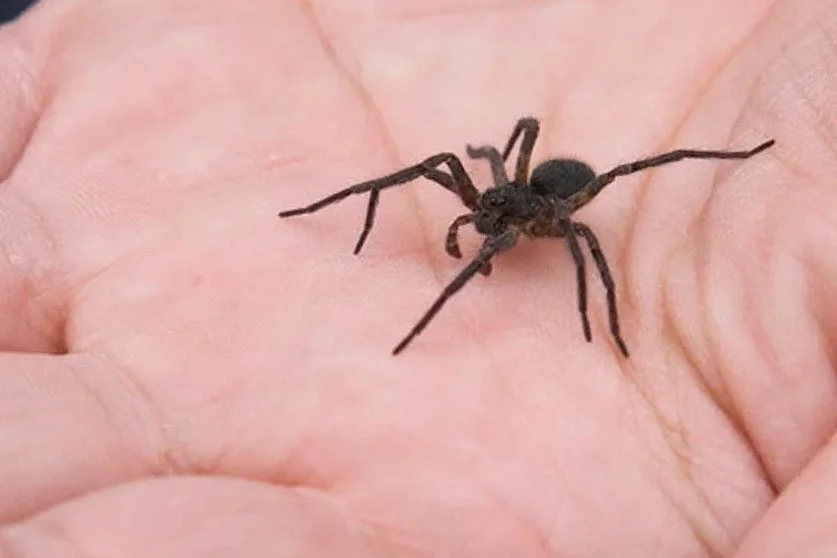

Photo Source: https://www.livescience.com/why-beavers-build-dams
June 2026
North American Beaver
(Castor Canadensis)
On our nickel, Canada’s national symbol, countless mascots, and their “tail” is a wonderful treat! Any guesses on who our critter is this month?
The North American beaver (Castor canadensis) is a very loved, but very misunderstood mammal. Beavers are the second largest rodent in the world, and the biggest one in Canada, growing to be around 40-50 pounds. They are native to all of Ontario and live anywhere that has flowing water and trees.
We have more in common with beavers than we think! Humans and beavers are the only mammals that alter their environments to directly benefit themselves. The original engineers of our landscape, beavers can make something from nothing and turn a dry wasteland to an area teeming with life and are often used in ecosystem restoration plans. We can use beavers as a tool to help ameliorate (to make better) the impacts of most types of environmental change. They can create so much change, in fact, that scientists and engineers have mathematic equations to account for the impact a beaver has on an ecosystem! In Wood Buffalo National Park in Alberta, there is a beaver dam stretching an astonishing 850 meters (2,790 feet). It is visible from outer space!
Beavers mate for life, and their kits live with them until they are about 2 years old. If you are lucky enough to see a baby, they ride on their parents backs until they are strong enough to swim on their own. Beavers are herbivores and eat the bark and twigs from younger trees. Like how we use our refrigerators, they store their twigs underwater in caches to save for the winter months. These caches create homes and nurseries for minnows and game fish like Largemouth Bass. They need to cut down trees so often not only for food and building materials, but also because they need to wear down their teeth because they continuously grow! Their teeth can grow a total of 6 feet in their ten-year life span, which is around 4-6 inches per year! You will most likely see them during dawn and dusk, making beavers something called “crepuscular”.
Beavers are not very skilled walkers but are amazing swimmers, using their webbed feet and paddle-like tail to help them move up to 10 km/hour. They can hold their breath for around 15 minutes which helps them find air pockets under the ice during the winter months.
Some history: In the 1600’s, beavers were the basis of the fur trade and a vital resource to Indigenous peoples in Canada as their pelts are very warm and waterproof. Their furs and engineering abilities are almost solely responsible for the Canada we know and are lucky to live in today.
No matter how cute and interesting, we cannot forget that beavers are sometimes considered a pest and are treated as such. Beavers can still be detrimental to property and livelihoods. Farmers can lose entire fields of crops and landowners can lose a lot of money if a beaver decides they want to flood a patch of land.
If you do have a beaver around, make sure you still respect their space! That loud tail slap is a warning to not come any closer. They are shy and like to be left alone.
Always talk to a professional before trying to remove a beaver from your land, as it is illegal to do so without a proper trapping license and often possible to relocate them in a humane way!
Sources:
https://crowspath.org/beaver-teeth/
https://harvest.usask.ca/server/api/core/bitstreams/1885985a-c996-4445-aa70-5aa51142dfff/content
https://parks.canada.ca/pn-np/nt/woodbuffalo/nature/beaver_gallery
https://ontarioturtle.ca/2019/07/natures-engineers-how-beavers/
https://tidcf.nrcan.gc.ca/en/diseases-and-damage-caused-by-other-agents/factsheet/2
https://trca.ca/conservation/restoration/beavers/

Winter Tracks: https://northernbushcraft.com/animalTracks/beaver/notes.htm

.Photo Credit: Charlotte Reisiger
May 2026
Clams of Haliburton

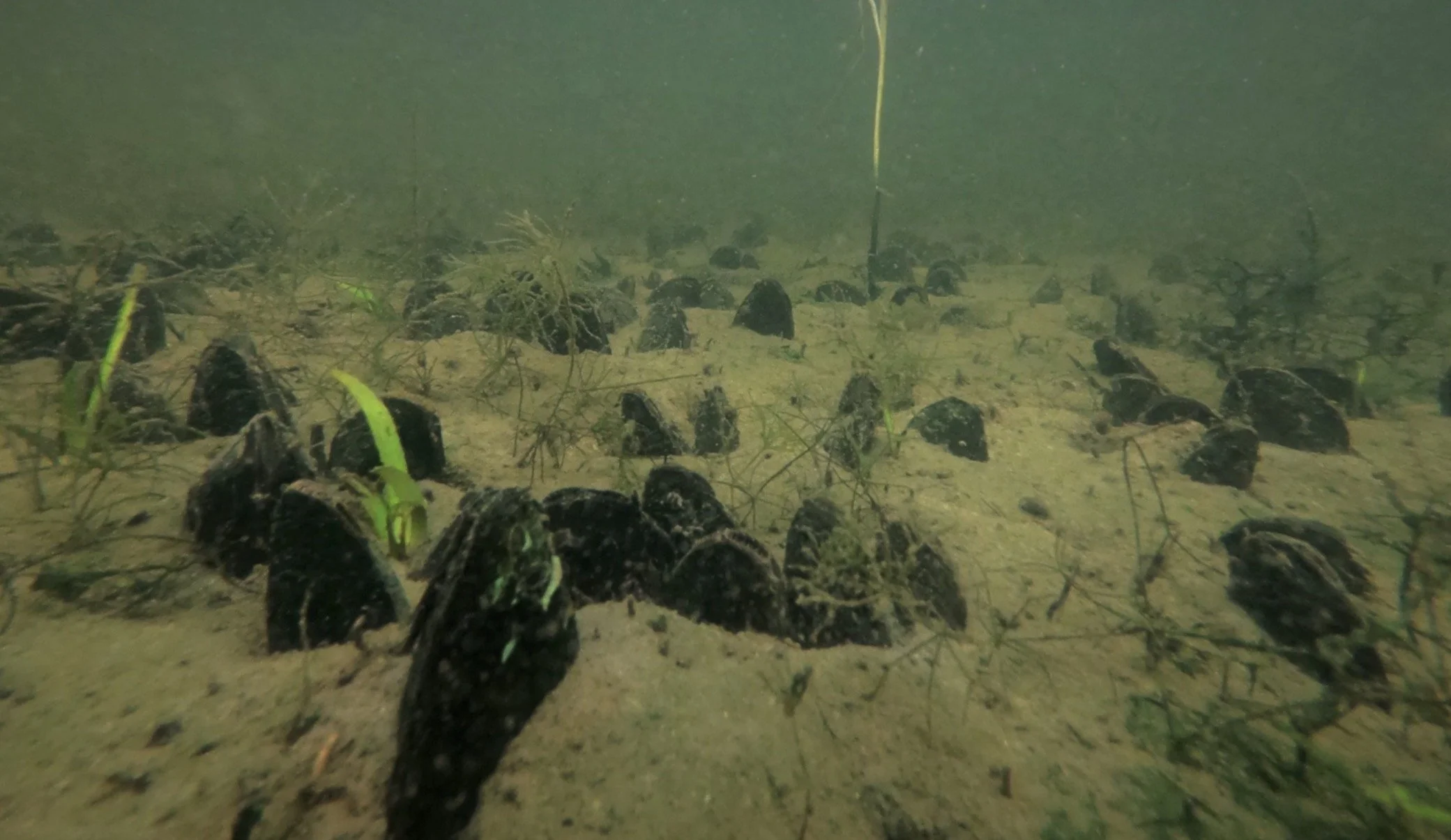
In previous creatures of the month, we have talked about animals that live above the water and on land. This month, our creature lives below the waterline. Freshwater clams are an often unnoticed and unsightly brown bump in the muck near our docks. They may just look like rocks that move, but inside their shells are a remarkable technology that filters our water and keeps our lake healthy.
Without them, not only would our lake be murky, it would also have an excess of sediment, harmful algae, bacteria and pollutants. Clams also have the ability to filter things like pharmaceuticals, personal care products, herbicides, flame retardants, E. coli, avian influenza, and heavy metals out of our water! Our freshwater clams also help keep our lake bottom held together, similarly to how trees hold river-banks together. Standing up right and burrowing into the lake bottom helps lessen substrate loss from wavy days and currents moving throughout the lake. To move around, they have something called a foot, which they use to push themselves along the bottom, creating those lines you may see in the sand on a sunny day!
They are a great source of food for Raccoons, Minks, Muskrats and Otters, when they have been eaten, their shells provide shelter for invertebrates like crayfish and aquatic insects.
These small creatures are incredibly powerful and efficient. Though our freshwater clams are not quite as efficient an oyster, who can singularly filter up to 50 gallons of water per day; a freshwater mussel can filter about 1.5 litres in an hour (9 US. Gallons/day). The population we have in Boshkung Lake easily filters thousands of gallons of water per day!
Another remarkable thing about freshwater clams is their means of reproduction. Many clams have evolved to have devices resembling bait for fish, like pieces of carrion, and in one case, a small fish that moves! You can check that out here: https://www.wired.com/2015/10/absurd-creature-of-the-week-lampsilis/
After baiting the fish with something that seems tasty, the clam shoots out tiny juveniles (resembling the character “Pacman”) that stick to the fish which are usually Perch, Sunfish and Bass species. Once the juvenile clams are mature enough, they drop off to find a home in the muck and rocks. This does not kill the fish, as it is a symbiotic relationship (both species benefit). The clam eggs get a free ride, and fish get clean water to swim, eat and live in.
Clams have historically been used as an indicator species, specifically for water quality. Like other species, their presence and absence tell us a lot about the water they live in. In another interesting article, a Polish Water treatment facility actually use clams as a real time indicators, or an alarm system to ensure proper chemical levels in the water they output for drinking. You can check out that article here: https://www.zmescience.com/ecology/poznan-mussel-water-plants-892524/
Freshwater clams are a serious underdog that we do not give enough credit to. Many experts call them the “unseen hero”! Without them, Boshkung lake would not look the same. Next time you see one, make sure you say thank you!
Sources:
https://www.zmescience.com/ecology/poznan-mussel-water-plants-892524/
https://www.wired.com/2015/10/absurd-creature-of-the-week-lampsilis/
https://www.fws.gov/story/2024-04/mussels-muscles-healthy-waterway
April 2026
American Marten


CLICK PHOTOS TO ENLARGE
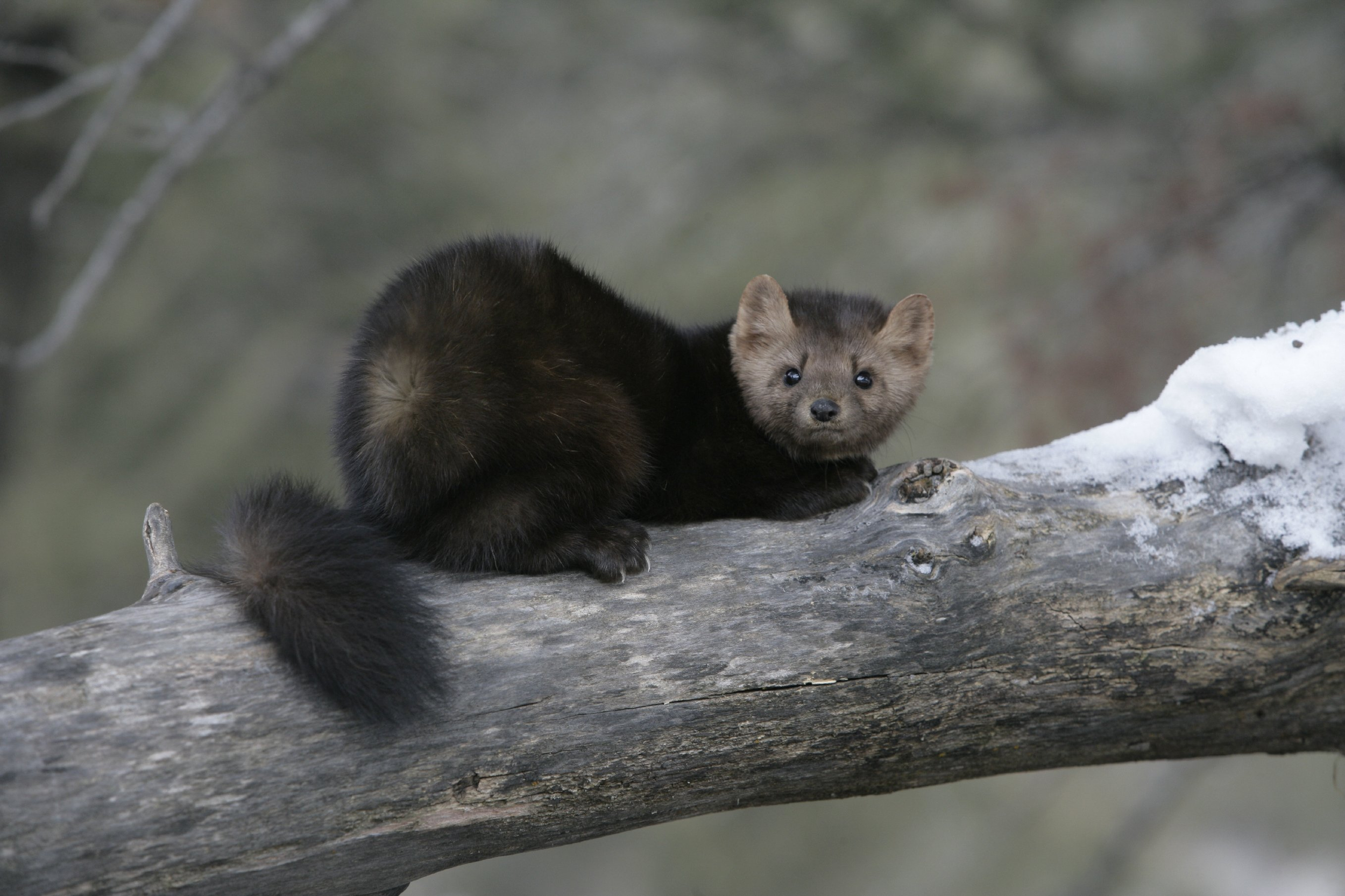
A shy, quick mammal not very many people are lucky enough to see, the American Marten is a skilled hunter and an incredible forest animal.
American Martens (Martes americana) are in the weasel family, which means they are built for sneaking around. Their slender bodies help them fit into small spaces and climb trees, perfect for hunting small animals like voles, mice, squirrels, chipmunks, small birds and eggs. They also are occasionally scavengers, eating carrion (dead animals) as well as nuts and berries. They are around the size of a very lanky house cat! Martens are around 50-60 cm long but weigh only around 1kg (about two bricks of butter) and can vary in different shades of brown-grey with a yellow-white underbelly. However, unlike cats, Martens do not have retractable claws! This makes climbing trees easy when evading predators and while hunting.
With their range spanning all across North America, the American Marten needs mature forest to live in. Areas that are relatively untouched in cottage country, like here in Haliburton, make the perfect homes for them. These rare critters live in hollow fallen logs or hollow trees, and generally stay away from areas of high human activity (like campgrounds). They mate in the late summer, and females enter an embryonic diapause (delayed implantation) until the winter and 1-4 young are born in the early spring. Mothers and their young stay together for a few months, then they become solitary again until mating season in July. Martens can live up to 10 years in the wild!
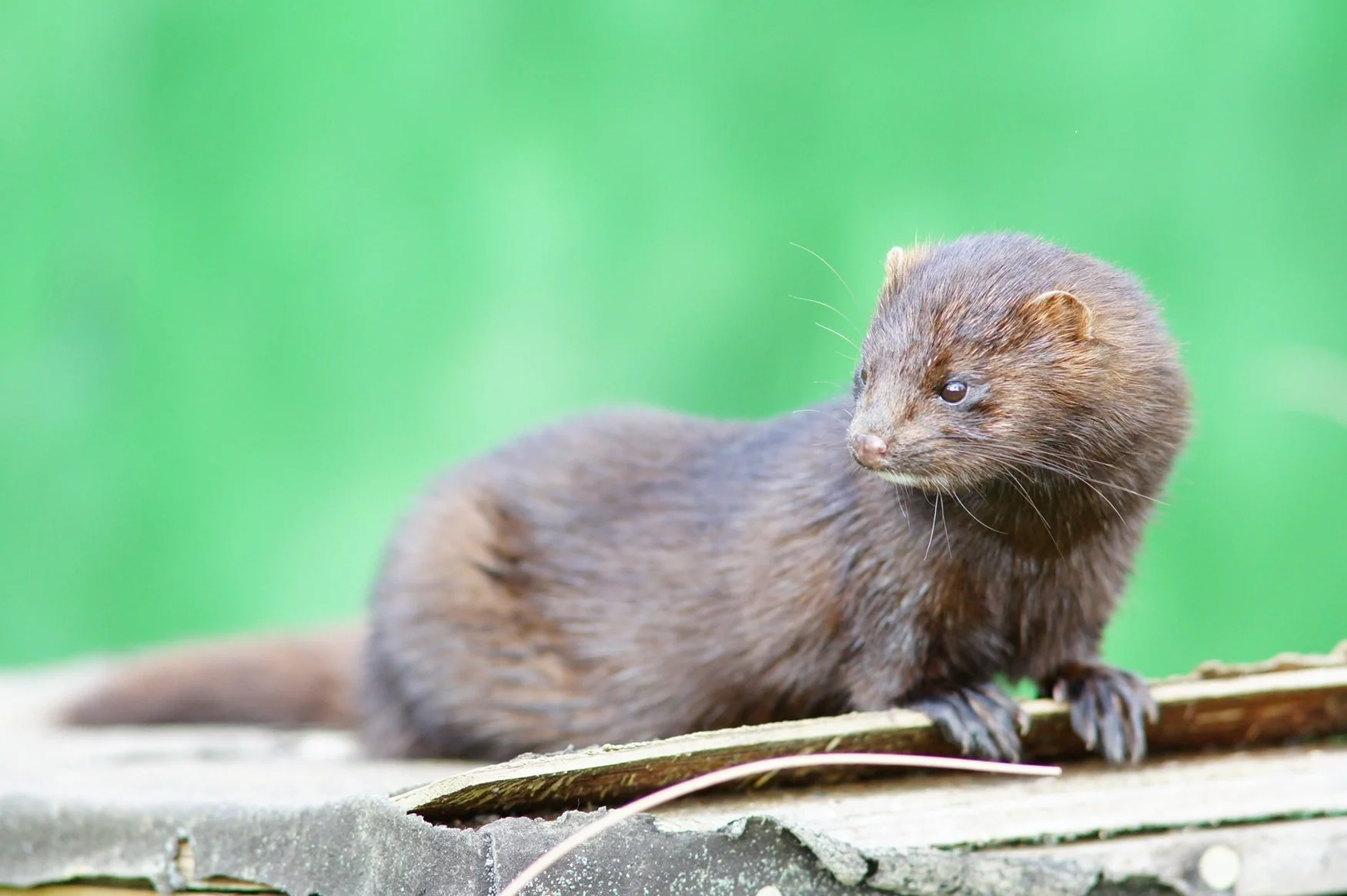
The Marten is often confused with the American Mink, another type of weasel that is present in the Haliburton area. Minks are much more common, as well as smaller, darker and have a white spot on their chin (some people think they resemble a pet ferret!). Minks also live around water, not in dense forests, because their diet consists mostly of fish and crustaceans.
Historically, Martens have been trapped for their soft furs, making them an important animal for many people’s cultures and livelihoods. However, due to irresponsible hunting and poaching, forestry practices that remove mature forests (and in turn the habitats they create), as well as forest fires have made Marten numbers decline and they are now listed federally as a Species of Concern.
Have you ever seen a Marten? They are very rare and shy, and we should consider ourselves lucky if the opportunity to see them comes up!
If you have seen one, you can report your findings on iNaturalist at:
For sightings, please visit:
Learn more about the American Marten at:
https://thecanadianencyclopedia.ca/en/article/marten
Sources:
https://animalia.bio/american-mink?environment=310
https://www.adfg.alaska.gov/index.cfm?adfg=americanmarten.main
https://thecanadianencyclopedia.ca/en/article/marten
https://www.ealt.ca/blog/fun-facts-marten
https://www.fs.usda.gov/pnw/pubs/journals/pnw_2002_bull001.pdf
https://natural-resources.canada.ca/forest-forestry/sustainable-forest-management/marten
For Comparison Purposes
American Mink
The American mink (Neogale vison) is a small, amphibious weasel inhabiting wetlands throughout Canada, excluding the tundra, and is abundant along the British Columbia coastline. Part of the genus Neogale, the American mink is closely related to the long-tailed weasel (Neogale frenata) and now extinct sea mink (Neogale macrodon), among others.
Source:
March 2026
Eastern Red-backed Salamander

Photo by Martin Ouellet - Amphibia-Nature

Photo by Joe Crowley
As one of the most plentiful amphibians here in the Algonquin Highlands, it’s common to flip over an old rotten log and see an Eastern Red-backed Salamander squirming about. Though small and slimy, the Eastern Red-backed salamander is a fascinating creature that we should all come to familiarize ourselves with and appreciate.
These little salamanders are not something to be scared of. They keep to themselves and do not like to be bothered (much like some of us!). They will not bite you and are not poisonous or venomous. They help us out by eating bugs we consider pests: spiders and mites, ants, centipedes, and slugs (and lots of other creepy crawlies)! They like living in damp, dark places, like under rocks and logs, maybe even near the foundation of your cottage, underneath leaf litter. They need to live in moist places because they do not have lungs; they actually breathe through their skin, and need to be wet in order to breathe.
This is important to remember when you find one and want to pick it up. Natural oils, lotions, sunscreen and bug spray on our hands can be very harmful to salamanders. It’s important to only enjoy their company with your eyes, and not touch them. If you do need to pick them up, clean your hands thoroughly and then wet your hands with clean water to avoid harming their skin.
Red-backed Salamanders are also masters of escape! Sometimes, when threatened, their tails will drop and continue to wiggle to confuse predators while they make a quick getaway. Don’t worry though, their limbs can grow back fully in a few months! How incredible! These salamanders are quite resilient to change and are often the first type of amphibian to repopulate areas impacted by fires and forestry projects.
Unlike some of their other amphibian friends, Eastern Redbacks lay their eggs on land, which they guard until they hatch and get big enough to venture off on their own. When they hatch, they’re around 2 cm, and they can grow up to 12 centimetres. They are called Eastern Redbacked Salamanders because of their orangey-red stripe down their backs, but they can also be grey and splotchy, a phase they go through called the Lead-back phase.
It’s important to keep these critters safe:
When doing yard work, being alert and careful when digging can go a long way.
Avoid using pesticides and herbicides
Do not get rid of old logs and leaf litter unless absolutely necessary
Never handle these salamanders without following proper protocol (no sunscreen, bugspray or lotion)
Have you seen one? We’d love to know! You can report your sightings here:
https://www.inaturalist.org/projects/herps-of-ontario
Sources:
https://thecanadianencyclopedia.ca/en/article/eastern-red-backed-salamander
[Posted: February 19, 2026]